
The best two-player abstract strategy games reward pure thinking with no luck and no hidden information, and the standouts are Go, chess, Othello, Hex, and Nine Men’s Morris. Which one suits you depends on how much depth you want versus how fast you want to learn.
Abstract games strip away themes and dice, leaving only the position in front of you. Both players see everything, so every loss is yours to own and every win is fully earned.
What Makes an Abstract Game Great
A great abstract game has simple rules but deep consequences, so beginners can start in minutes while experts study for decades. It should also have no randomness, meaning skill alone decides the outcome.
Depth-to-complexity ratio is the key measure: the best games get enormous strategic richness from very few rules. Go is the classic example, with rules simpler than checkers yet strategy deeper than chess by most measures.
When choosing a game, weigh these factors:
- How long the rules take to learn.
- How high the skill ceiling climbs.
- Whether you enjoy building or capturing.
- How available opponents and apps are.
- Whether draws are common or rare.
- How well the game scales to different board sizes.
Availability matters too, since a game is only fun if you can find opponents, and the biggest titles have thriving online communities.
The Top Games Compared
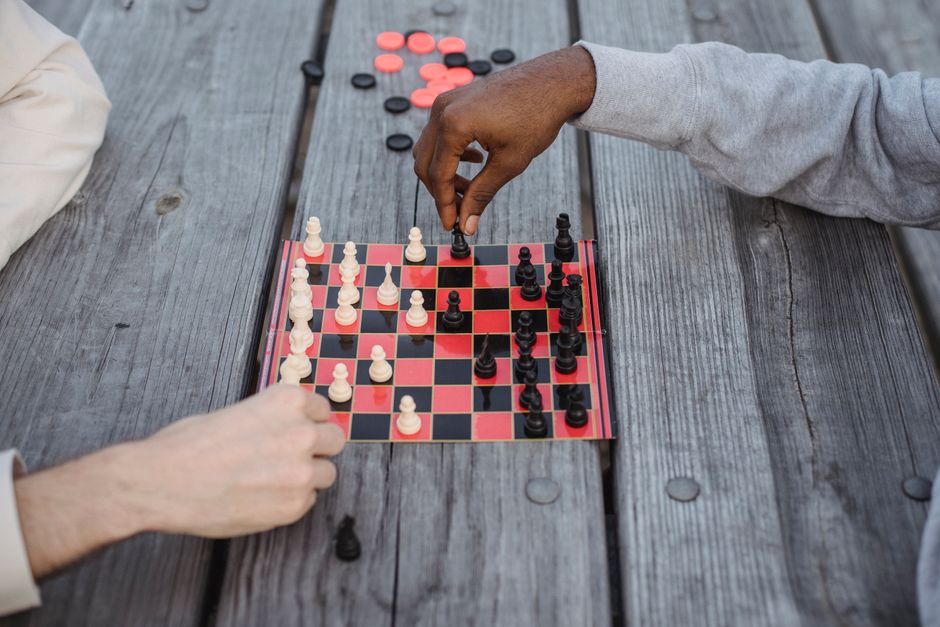
Each of these games has stood the test of time, but they feel very different at the table. The table below sums up the trade-offs.
| Game | Learn time | Depth | Style |
|---|---|---|---|
| Go | 10 minutes | Extremely high | Territory building |
| Chess | 30 minutes | Very high | Piece capture and mating |
| Othello | 1 minute | High | Disc flipping |
| Hex | 2 minutes | High | Connection racing |
| Nine Men’s Morris | 5 minutes | Medium | Mill forming |
If you have never played an abstract game seriously, start with Othello or Hex. Both teach deep positional ideas without the heavy rule load of chess or the vast board of Go.
Go and chess reward long study, while Othello and Hex give fast, satisfying games you can improve at quickly. There is no single best choice, only the best fit for your taste.
Underrated Games Worth Trying
Beyond the famous names sit several abstract games that reward exploration. Hnefatafl and its cousins, the Tafl family, pit an outnumbered king trying to escape against a larger surrounding force, giving a rare asymmetric contest with pure-skill roots.
Games like Havannah, Y, and TwixT extend the connection idea from Hex into richer shapes and win conditions. Havannah asks you to build one of three winning structures, while Y guarantees a winner much as Hex does, and TwixT adds bridges you place across a pegged board.
Draughts, better known as checkers, deserves respect too. Its rules are simpler than chess, yet tournament draughts on the international board demands deep calculation and has been studied intensely for generations.
Traditional world games round out the picture. Mancala families such as Oware use seed-sowing and capturing for quick, tactical play, and Shogi brings a chess-like game with the twist that captured pieces re-enter on your side. Sampling a few of these broadens your sense of what abstract strategy can be, and one of them may become your new favorite.
Physical Boards Versus Playing Online
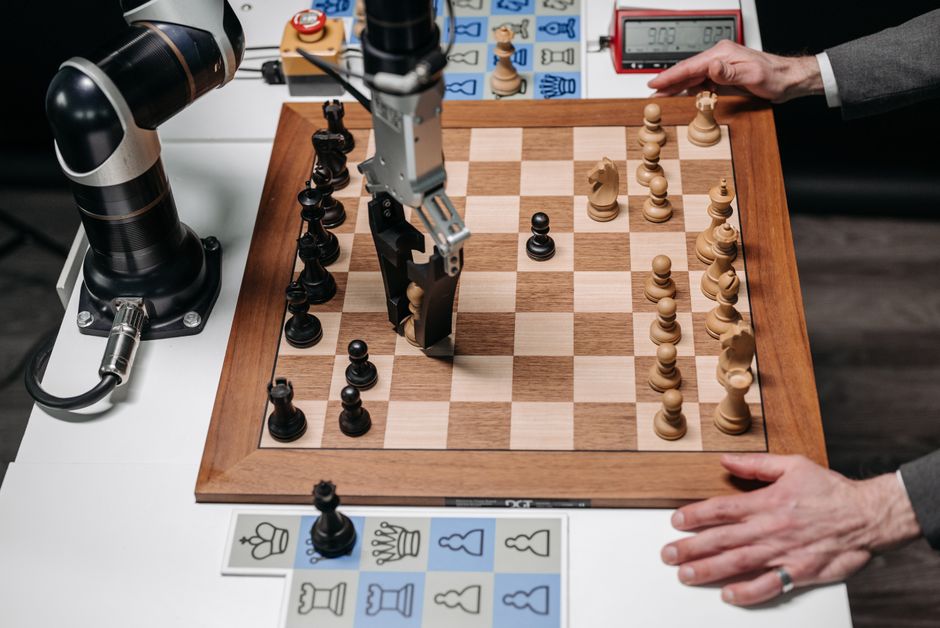
How you play shapes the experience as much as which game you choose. A physical board invites slow, face-to-face games where you read your opponent as well as the position, and the tactile stones or pieces add a pleasure screens cannot match.
Online play offers instant opponents, built-in rating systems, and analysis tools that speed up learning enormously. Servers can match you with someone of exactly your strength in seconds, review your games afterward, and let you replay any position, which is why most improving players split their time between board and screen.
Beginners benefit from starting online for the sheer volume of practice. Playing fifty quick games of Othello or Hex against varied opponents builds pattern recognition far faster than a weekly game at the kitchen table. Once the patterns feel natural, a slow physical game becomes a richer, more thoughtful test.
Teaching others is easier over a real board, where you can point, undo, and talk through ideas without a clock pressing. For family and casual settings, a handsome physical set also simply invites more people to sit down and try. The ideal is to use both: the screen for reps and study, the board for depth and company.
Picking the Right One for You
If you love slow, sprawling strategy where influence grows across a huge board, Go is unmatched. Its handicap system also lets players of very different strengths enjoy a fair game.
Choose chess if you prefer sharp tactics, named openings, and a deep body of study material. Few games have as many books, tutorials, and online opponents ready at any hour.
For quick sessions, Othello and Hex shine. Othello’s flipping creates dramatic late swings, while Hex guarantees a winner every game because draws are mathematically impossible on its rhombus board.
Nine Men’s Morris and similar traditional games sit in a friendly middle ground, easy to teach to family yet deep enough to reward tactics. They also travel well, needing only a small board and a handful of pieces, which makes them ideal for cafes, trains, and rainy afternoons.
Try two or three of these, play twenty games of each, and let your own enjoyment decide. Do not feel obliged to chase the deepest game on paper; a title you actually look forward to playing will teach you more than a revered one that sits in its box. Depth reveals itself only to players who keep coming back, so genuine enjoyment is the surest path to mastery of any abstract game. The best abstract strategy game is simply the one you keep wanting to set up again.